21
May 2016
I
ndustrial
C
omputing
ability with all modules which are compliant
to the PICMG AMC.0 (R2.0) specification.
This makes it easy for every embedded system
designer to create the desired application with-
out worrying about the system infrastructure
including cooling, switching and managing.
Power supply is also part of this defined envi-
ronment. The power modules (PM) are usu-
ally installed in specially designated slots in
the chassis occupying valuable space. In this
system the PM functionality is put on a mez-
zanine board behind the backplane, providing
12V and all the specified power management
functions. The included power module sup-
plies 150W, which is more than sufficient to
serve the payload boards as well the embed-
ded MCH and the cooling units. Having the
power module mounted on a mezzanine
card decreases the required space and conse-
quently the cost as well.
One big issue in small form factor applications
is heat dissipation. Cooling is one of the most
important functions to avoid overheating and
ensure a high grade of system availability. In
fact, the ambient temperature does have an
impact on the lifetime of the components
in the system as well as on the AMC mod-
ules. Therefore the MTCA system is equipped
with a powerful cooling unit, providing a free
blowing air flow of more than 2m³ per min-
ute. The integrated air filter protects the AMC
against dust and dirt and can be replaced eas-
ily for service.
The speed of the fans is normally managed by
the MCH. The MCH reads the temperature
sensors on the AMCs and in the chassis, and
then determines the optimal fan speed. The
communication between MCH and cooling
unit (CU) usually happens through the IPMB
bus. This strategy, however, requires a powerful
IPMC management processor on the CU with
dual IPMB connections to the MCH. In order
to meet the commercial challenge, Pentair uses
a lower-cost implementation in their small
2-slot chassis. This CU uses a small processor
with just a private I2C connection to the MCH.
In this case, the MCH includes special firm-
ware that treats the low cost CU as if it were
a normal CU. From the user perspective there
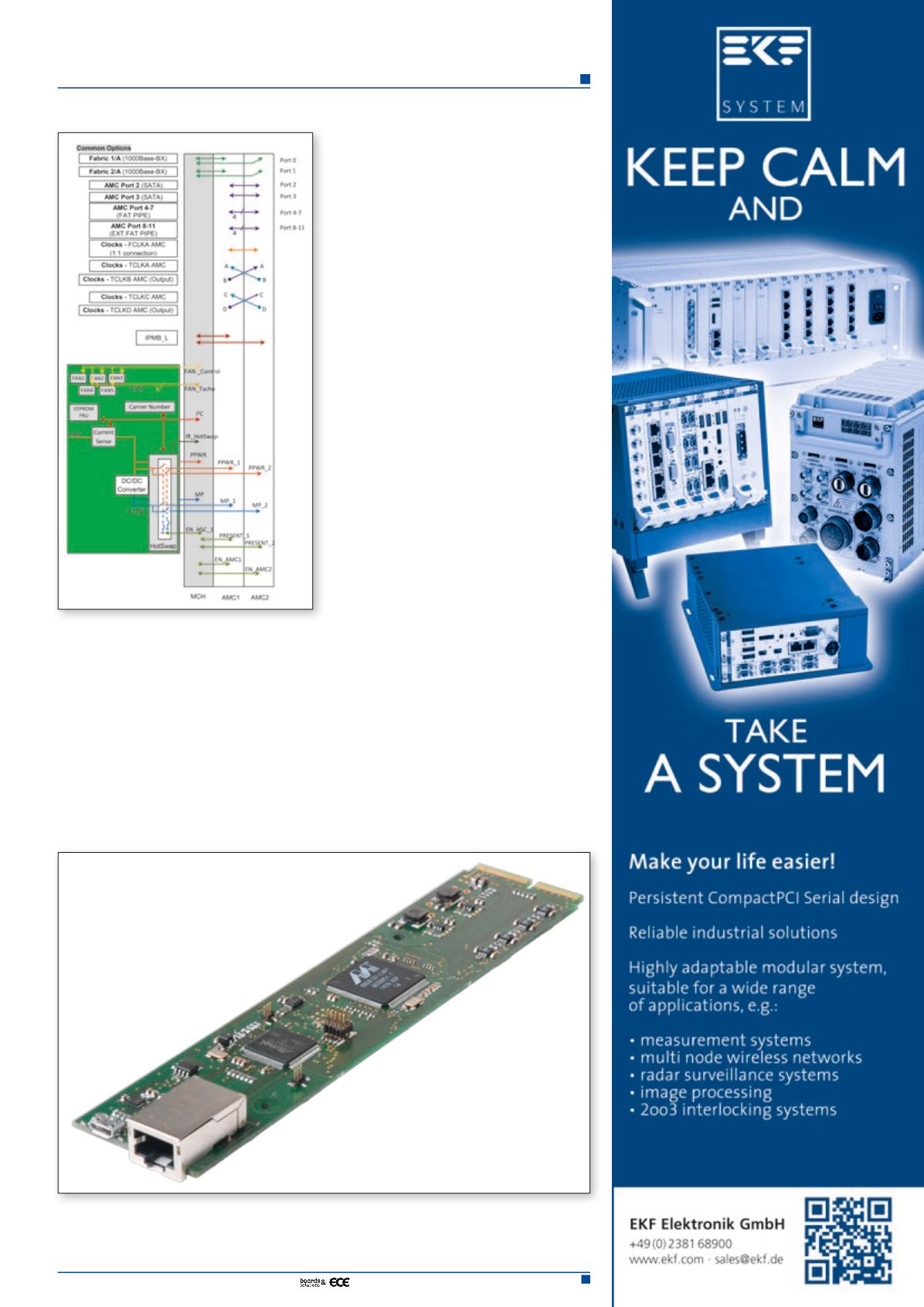
Figure 2. Backplane topology 2-slot MTCA
with eMCH
Figure 3. NAT Embedded Micro carrier hub


