October 2015
22
E
mbedded
C
omputing
to ensure sufficient heat dissipation another
housing also surrounds the splash-proof pro-
cessor unit. High-performance IP52-rated
fans in the space between the construction
provide continuous air circulation, expelling
the heat outwards. Although the decision to
use vulnerable fans contradicts the idea of an
almost maintenance-free system, the risks
were outweighed by the advantages of main-
taining a compact construction without the
need to compromise on processing power.
What’s more, the need for maintenance is
reduced to a minimum because the electron-
ics are left untouched inside the second box.
In order to ensure reliable operation and
prevent the possibility of an expensive fail-
ure of the electronics, the developers looked
to redundant architectures and monitoring
components. To this end, they installed two
redundant power supply units (PSUs) that can
assume the tasks normally performed by the
defective power supply unit if a failure should
occur. During normal operation, however,
the output is divided between the two PSUs,
and this in turn helps to increase their work-
ing life. Given the strong fluctuations in the
voltage of the power supplied by generators
on the drilling sites, additional input voltage
monitoring combined with a high-speed DA
converter was necessary in order to verify the
quality of the voltage. This information can
also be transmitted via remote diagnostics
(made possible thanks to Intel AMT technol-
ogy), allowing generators with a harmful volt-
age to be switched off from the control center.
Should a power failure occur in spite of these
measures, a back-up battery will keep the sys-
tem running for a maximum of 20 minutes
– just enough time to trigger and send the cor-
responding error message and shut down the
system correctly.
The three CompactPCI PlusIO CPU com-
ponents are also monitored by a system con-
troller, which is used to read and analyze
diagnostics data from the BIOS upon booting.
If a defect is detected in one of the CPU com-
ponents, this information is conveyed to the
data processing center during start-up. The
transmission of data from the server plat-
forms to the drilling sites and onward to the
data processing center is encrypted by secu-
rity protocols and corresponds to an end-to-
end encryption. This makes the transmission
path of the data negligible; in any case, the
information can only be read with the corre-
sponding recipient key from the data process-
ing center.
CompactPCI and a combination of Compact-
PCI-Plus IO and CompactPCI Serial served
as the perfect starting point from which to
implement this IoT system given their sta-
tus as tried-and-tested and widely-used stan-
dards. The sophisticated design of the housing
and the security measures made this funda-
mentally robust 19” technology suitable even
for high processing performance in offshore
applications – and these possibilities can, of
course, also be applied to any other mobile
transportation market.
While the project described called for a
very specific housing to suit the customer
needs, many IoT applications can already be
achieved using standard systems. MEN relies
upon scalable, pre-configured network com-
ponents in the form of a ½ 19” system or a box
PC to this end. Both of these forms offer the
option for flexible configuration on a built-
to-order basis. And of course, they have also
been prepared with mobile markets in mind:
they meet the EN 50155 requirements govern-
ing rail and e-mark labelling for automotive
applications, they function in the extended
temperature range and they use fixed soldered
components only.
n
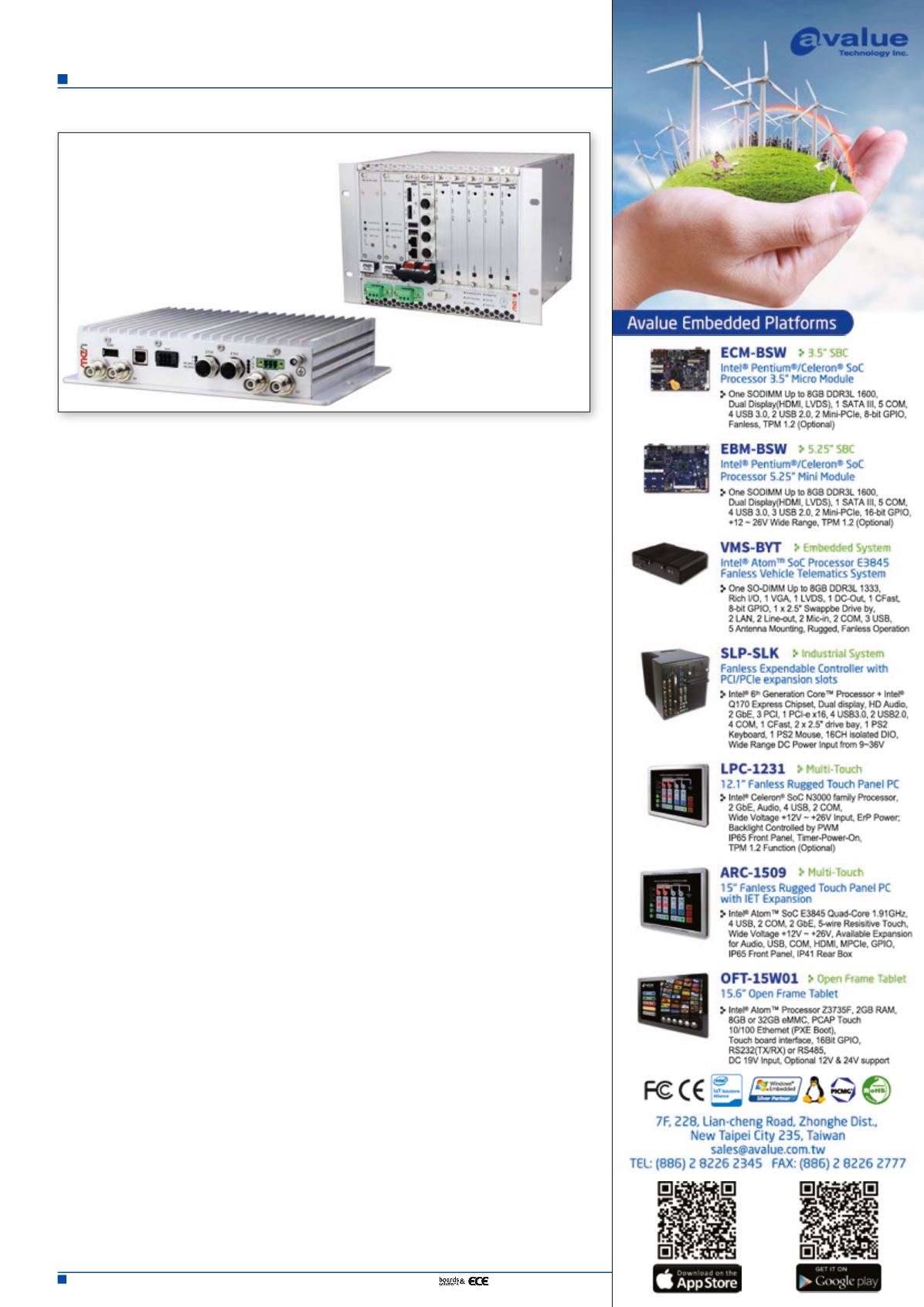
Figure 2. Robust network components: the wireless access point or gateway in the form of a con-
duction-cooled Box PC, and the modular storage system as a ½ 19” system. Both offer the option
for flexible adaptation on a built-to-order basis.


