electronica Nov 2014
40
W
IRELESS
the key differences in objective between the
HEW SG and past IEEE 802.11 efforts. The
HEW SG will consider both PHY innovations
(such as orthogonal frequency division multi-
ple access, OFDMA, modulation) and uplink
MU-MIMO and MAC innovations (such as
interference management and dynamic sensi-
tivity control). The initial target of the HEW
SG is to improve average throughput per
station by at least 4× in dense deployments.
Update: since this article was written, HEWSG
has completed its feasibility study. The IEEE
standard board moved the effort to the next
stage and officially created task group IEEE
802.11ax. This task group will discuss technical
solutions needed to meet HEW requirements
and reach consensus on updates to the IEEE
802.11 standard.The cellular ecosystem is pre-
paring for increases of as much as 1000× over
present demand in cellular data traffic in future
Long-Term-Evolution (LTE) and Fifth-Gen-
eration (5G) cellular networks. Given this
expected volume, offloading some user traffic
to a WiFi network represents an attractive solu-
tion to meet this data demand. As a result, cel-
lular carriers around the world are deploying or
partnering with WiFi networks.
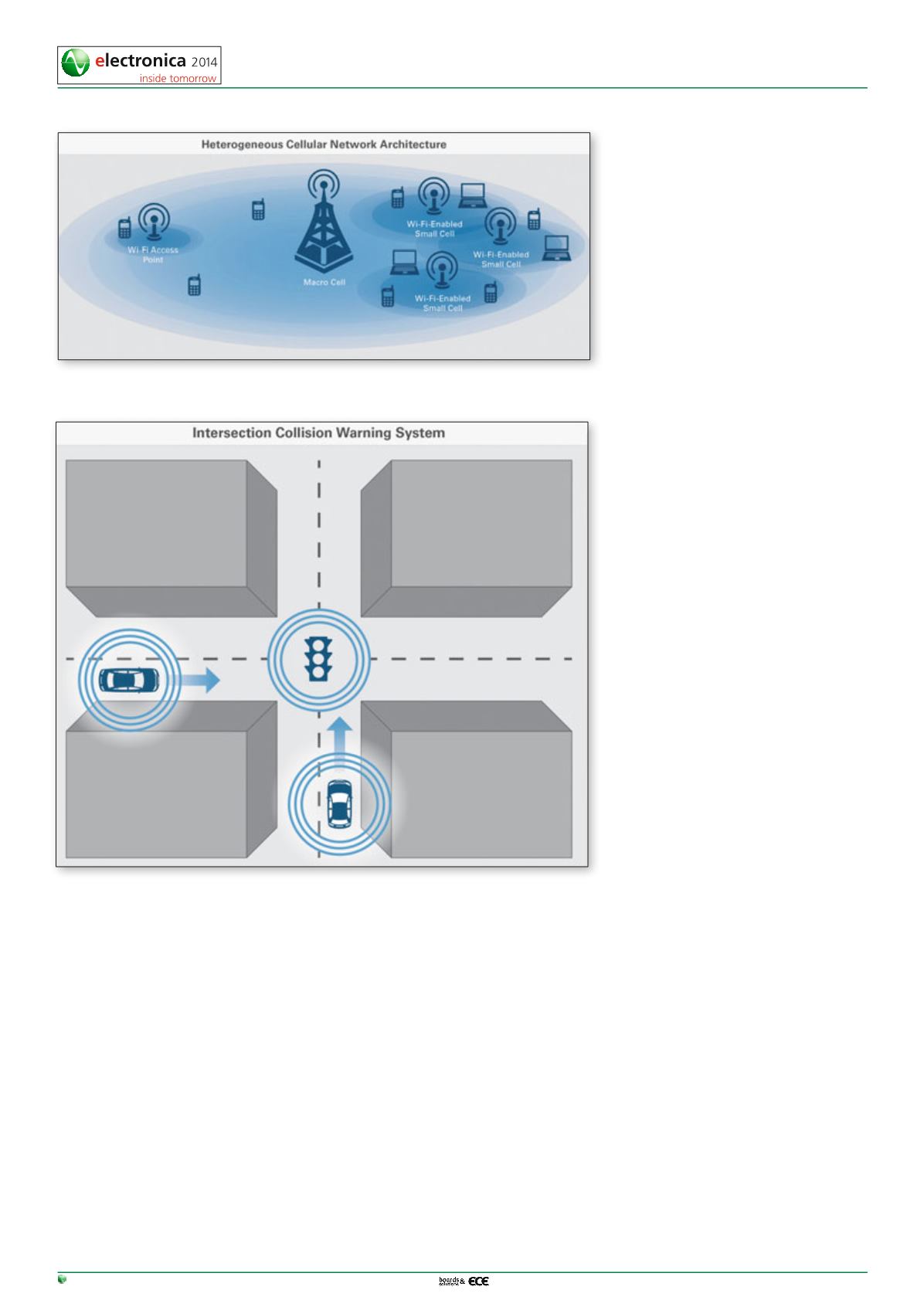
Figure 2 shows a simplified example of a
next-generation heterogeneous cellular net-
work with integrated WiFi. In addition to the
traditional wide-area macrocell tower, the net-
work includes a dense network of indoor and
outdoor small cells with varying range servic-
ing areas of high handset density (hotspots)
such as downtown neighborhoods. Most of
the small cells will have integrated cellular
and WiFi access-point capabilities, but some
may be WiFi- or cellular-only cells. The net-
work will cooperatively make decisions (e.g.
when to offload a user from cellular to WiFi)
to meet data traffic demand. In hotspots, it is
beneficial to have a very dense deployment.
However, carriers have found that efficient
scaling of a network based on current WiFi
technology is challenging in dense scenarios
and, hence, the interest in HEW SG. There are
other pieces to the carrier-grade WiFi puzzle,
such as RF coexistence testing, integration
with cellular network infrastructure, and opti-
mizing handoffs between WiFi and cellular
networks. The WiFi Alliance is working on
a first version of carrier-grade WiFi certifica-
tion based on existing WiFi technologies and
some incremental changes. But, if HEW SG is
successful, it has the potential to revolution-
ize the performance of carrier-deployed WiFi
and beyond.
The third trend influencing the future of WiFi
is the exponential growth expected in the
Internet of Things (IoT) and machine-to-ma-
chine (M2M) communications. Wireless con-
nectivity is seen as an important enhancement
for the sensors and meters used in markets
such as smart grid, healthcare, fitness, con-
sumer wearable devices, and industrial mon-
itoring. IEEE 802.11ah defines a lower-power
version of WLAN to better address these use
cases. To reduce power requirements, IEEE
802.11ah adds support for lower bandwidths
(1 and 2 MHz are mandatory modes), uses
lower data rates (typically less than 2 Mb/s),
and uses unlicensed spectrum in the 900
MHz range. MAC layer enhancements in
IEEE 802.11ah improve power-save modes
and network scalability. As a result, access
points can support a huge number of very low
rate sensors efficiently. An example use case
is in smart grids, where IEEE 802.11ah access
points attached to electric utility poles con-
nect wirelessly to sensors/meters in nearby
homes to collect information on energy usage.
The instantaneous information provided can
be used for customer billing purposes and to
improve power grid performance.
The fourth trend impacting WiFi is the use of
intelligent transport systems and the growing
application of IEEE 802.11p.The IEEE 802.11p
amendment supports vehicle-to-vehicle and
vehicle-to-infrastructure communications for
intelligent transport system applications. Reg-
ulators in the European Union (EU) and in the
US have designated spectrum near 5.9 GHz
for this application. In the US, this spectrum is
typically referred to as dedicated short-range
communications (DSRC) spectrum. Figure 3
shows an example use case, where the IEEE
802.11p enabled automobiles and traffic infra-
Figure 3. This example shows how IEEE 802.11p enabled automobiles and traffic infrastructure
(e.g. a traffic light) to cooperate to avoid any potential collisions in the intersection.
Figure 2. This is a simplified example of a next-generation heterogeneous cellular network with
integrated WiFi.


